PART 5 · Harness & Self-Improvement
From Scaffolding to an Self-Improving System
Harness is more than a wrapper around a model. It is becoming the core engine of AI recursive self-improvement.

Everything in this Part comes from Lilian Weng's blog post
The entire framework, concepts, and cases of Part 5 come from "Harness Engineering for Self-Improvement", published by Lilian Weng in July 2026. All I do here is retell it in a way that works in a classroom — the ideas and the credit belong to the original author.
She is a researcher I deeply respect, and her writing on AI safety and the Agent frontier has been required reading in this field for years. I highly recommend following her on X, and reading the original post once you finish this chapter.
She is a researcher I deeply respect, and her writing on AI safety and the Agent frontier has been required reading in this field for years. I highly recommend following her on X, and reading the original post once you finish this chapter.
Evolution of RSI
1965 · Good
"Ultra-intelligent machine": a machine that can design better machines. Theoretical concept.
2008 · Yudkowsky
Formally proposed "Recursive Self-Improvement": AI uses its own intelligence to improve the cognitive mechanism that produces intelligence.
2023–2024
Early experiments: self-play, synthetic data, test-time training. Models start improving their own training data.
2025–2026
Harness engineering becomes the core path for RSI: models don't directly rewrite weights — they improve the deployment systems, workflows, and context management around themselves.
What is Harness?
Harness = Every Orchestration System Around the Model
Harness is the runtime system surrounding the base model that determines how the model:
Thinks and plans · Calls tools and takes actions · Perceives and manages context · Stores artifacts · Evaluates results
Successful AI products (e.g., Claude Code, Codex, Cursor) have proven: the Harness layer is as important as the raw model intelligence. A mediocre model with an excellent Harness often outperforms a stronger bare model.
Thinks and plans · Calls tools and takes actions · Perceives and manages context · Stores artifacts · Evaluates results
Successful AI products (e.g., Claude Code, Codex, Cursor) have proven: the Harness layer is as important as the raw model intelligence. A mediocre model with an excellent Harness often outperforms a stronger bare model.
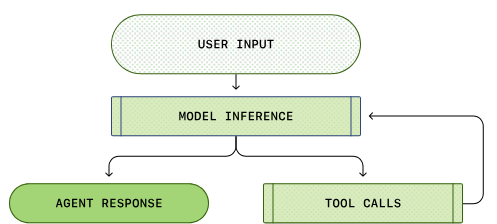
A simplified Codex Agent loop: the Agent calls tools, tool responses influence the next generation round. (Source: OpenAI)
Why is Harness the Practical Path for Near-Term RSI?
Three-Step Prediction for Near-Term RSI
1. Models will not directly rewrite their own weights, but they can improve training pipelines and deployment systems, making the next generation stronger.
2. Harness engineering moves toward meta-methodology: the object of improvement shifts from answers themselves to the mechanism for getting better answers. Harness itself becomes the optimization target.
3. Mature Harness + intelligent model = positive feedback loop: better Harness breeds stronger models, and stronger models mean Harness doesn't need to be over-engineered.
2. Harness engineering moves toward meta-methodology: the object of improvement shifts from answers themselves to the mechanism for getting better answers. Harness itself becomes the optimization target.
3. Mature Harness + intelligent model = positive feedback loop: better Harness breeds stronger models, and stronger models mean Harness doesn't need to be over-engineered.
Analogy with Prompt Engineering
We've already seen a softer version: as instruction fine-tuning and reasoning capabilities improve, manual Prompt tricks become less central, but the need to specify goals, constraints, context, and evaluation never disappears.
Similarly, many Harness improvements will eventually be internalized as model behavior, but the interface with external context and tools will always remain.
Similarly, many Harness improvements will eventually be internalized as model behavior, but the interface with external context and tools will always remain.
Core thesis: Recursive self-improvement doesn't need to start with directly modifying model weights. A more realistic path is to have the model improve the Harness system around it (context management, workflows, tool orchestration, evaluation), creating a continuously improving flywheel. This is the central argument of Harness Engineering for Self-Improvement.