AI Image Generation
Using AI to Write Prompts for AI
The user says "Alice is daydreaming on the balcony." The image model needs a long, precise visual description — that one sentence is far from enough. There is a translation step in the middle: using an LLM to translate plain language into image generation language.
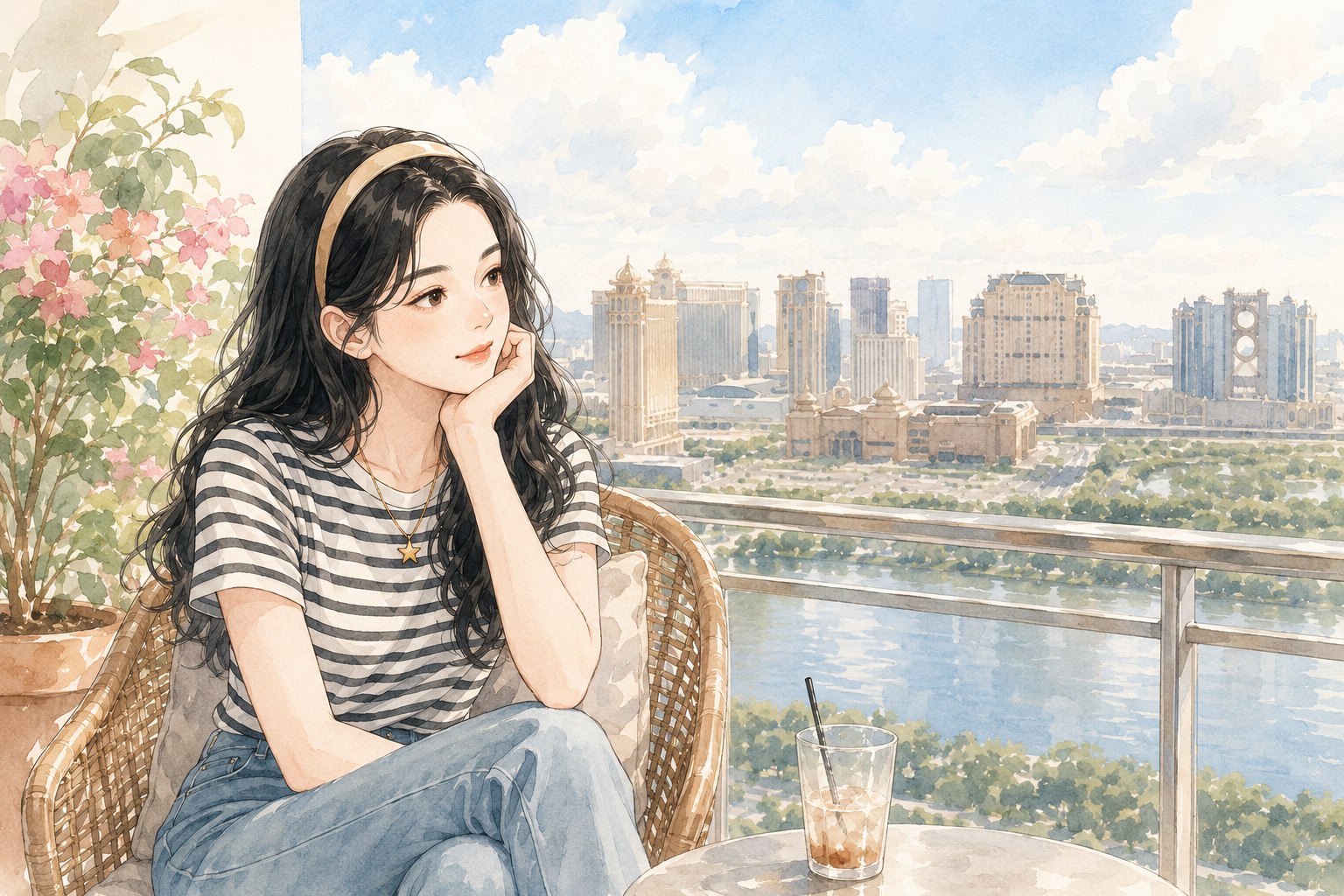
Example 1: Daydreaming on the Balcony
User says
"Alice is daydreaming on the balcony"
LLM translates into image generation Prompt
A young woman named Alice standing on a sunlit balcony, leaning against the railing, gazing into the distance with a dreamy expression. She has shoulder-length dark hair, wearing a white blouse with a small star necklace. Soft afternoon golden hour lighting, potted plants on the balcony, blurred city skyline in background. Illustration style, warm color palette, peaceful mood. Upper body to full body composition.
Image model output
One more example
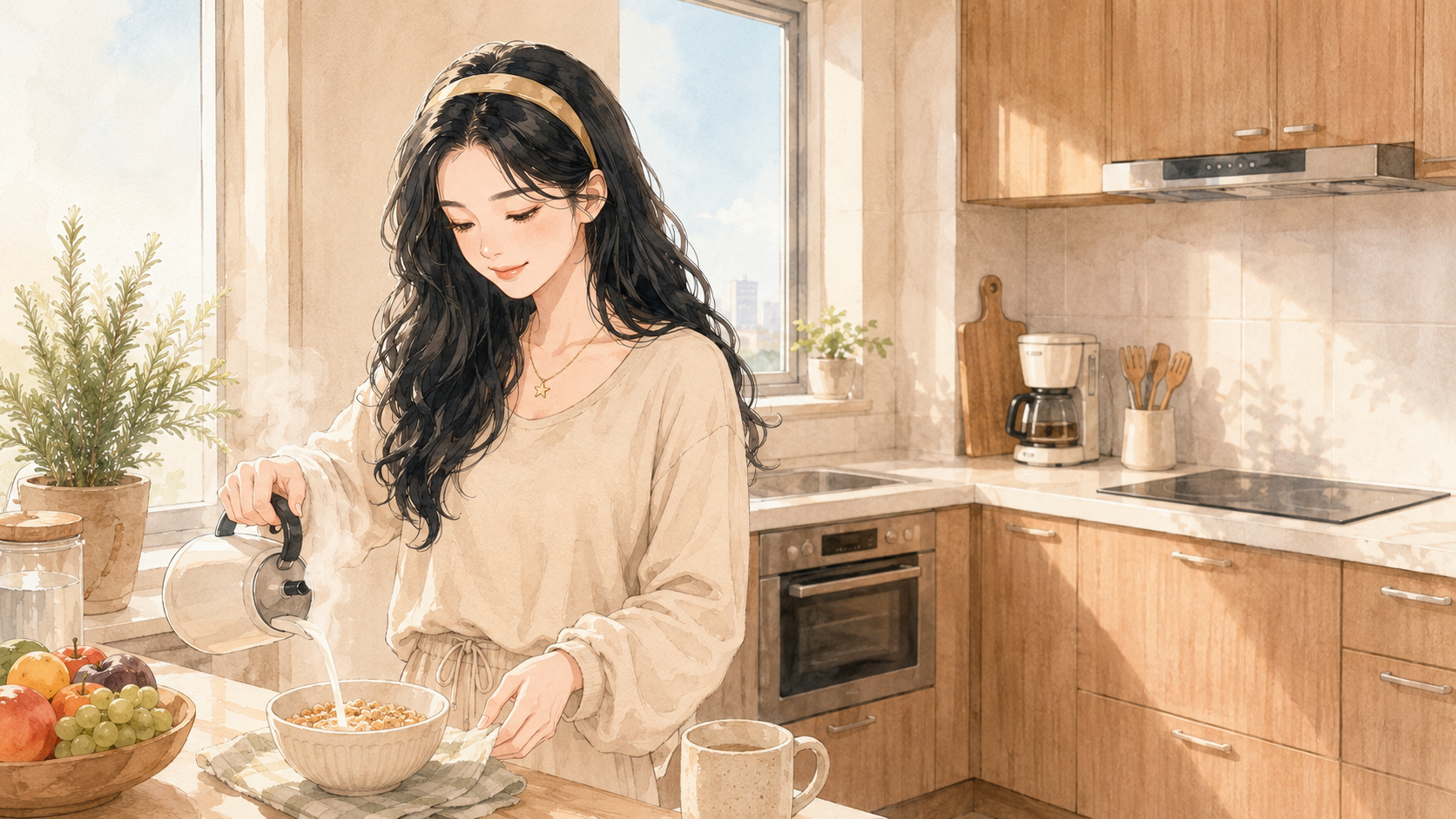
Example 2: Morning Cooking
User says
"Alice is cooking"
LLM translates into image generation Prompt
A young woman named Alice in a bright modern kitchen during morning time, cooking breakfast. She has shoulder-length dark hair, wearing a casual cardigan over a white top with a star necklace. Warm natural light streaming through windows, kitchen utensils and ingredients on counter, steam rising from pan. Illustration style, cozy domestic atmosphere, soft warm tones. Wide shot showing kitchen environment.
Image model output
Why is this translation layer necessary?
① Users can't write image gen Prompts: they don't know whether to specify "golden hour lighting" or "illustration style"
② Image models can't understand vague intent: "daydreaming" is not a visual description to the model
③ Each image model has its own dialect: Midjourney, DALL-E, and Stable Diffusion each prefer different Prompt styles
① Users can't write image gen Prompts: they don't know whether to specify "golden hour lighting" or "illustration style"
② Image models can't understand vague intent: "daydreaming" is not a visual description to the model
③ Each image model has its own dialect: Midjourney, DALL-E, and Stable Diffusion each prefer different Prompt styles
What the user imagines and what the image model needs are completely different languages. In Alice, every single image generation has an LLM doing the translation behind the scenes: expanding one user sentence into a detailed visual description hundreds of tokens long. This isn't a nice-to-have — it's a necessary architecture.